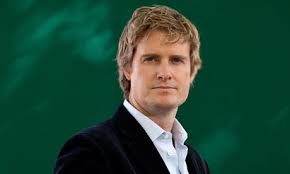
When Tristram met ThePrimaryHead

Image

I was very excited to be invited to a round table discussion with @TristramHuntMP on Friday. Not least because there is a chance he could be our new man in Whitehall for education: making decisions that will impact upon us all but also because it was at 2:30pm on Friday afternoon which meant I could be home early after popping into Asda to buy a box of wine!

I had no idea what to expect or more worryingly what to ask. I certainly know what I think is important in education and what direction I would like to see it move in but I wasn’t sure if that was the point. I’ve been completely brainwashed by the last ten years of lesson observation expectations: I need to know the learning objective or else I just can’t function! I was also a little bit scared that my question would be too small minded – did he really want to talk about ‘Levels’ or SPAG tests? Is that honestly all I could bring to the table? The big grown up table of education? It would be like the first Olympic committee when Seb Coe asked everyone around the room to think strategically about holding the Olympic Games in London and I’d be the one fixating about the colour of the medal ribbons or why on the Olympic logo, London, didn’t use a capital ‘L’.

This was my chance to make a profound contribution to the future of education and I had nothing! Luckily, neither did he.

Now that’s mean, I’m sorry. That was a cheap gag and in all fairness it does him an injustice. He had some ideas and he went through a few of them; and ok at times his delivery was similar to contestants on ‘Dragon’s Den’: the ones who half way through their pitch realise that their big idea makes about as much sense as the word ‘foap’ in a year 1 phonic test. He would occasionally trail off in the middle of his idea for ‘re-shaping localised school accountability measures through a single representative body who had ultimate accountability for securing improvement measures in sets of locally aligned schools’ (or something) and look at us saying ‘I mean, what do you think?’

Now I can’t speak for the other five head teachers who were there but at no point did we stand up and say ‘By Gove, I think he’s got it!’ But neither did we get up, slap him about the chops and tell him to get a grip. We recognised (at least I did) that he is engaging with school leaders to find out about issues that matter and in my mind he genuinely seemed to care. (I can’t say whether he cares because it’s his job or because he cares about education but either way he’s motivated and he wants to listen.)

I’ll admit the first thirty minutes did sort of go over my head/interests: academy take overs/new schools planning/school improvement models/executive heads. But eventually we settled in to interesting things that will affect everyone in education rather than specific schools in specific circumstances. So what were they? I have tried to summarise some of the things we talked about and what I write will be what I walked away thinking about whilst queuing to buy my box of wine.

Local Authority: There is no model and there isn’t one being planned. The landscape of education is doomed to be disparate groups ‘challenging and supporting each other’. I hate this. It really depresses me. Loads of little power hungry groups all looking for the next weakling to eat up and digest. No shared accountability, no shared vision for standards across cities. Everyone doing what they want and proving that it is working for them even though we’ll all be judging ourselves against different criteria and against each other. I hate it. I actually want to live in a world where we are ‘all in it together’ and this ain’t it. I don’t think @TristramHuntMP wants it either but I think we’ve gone too far to get anything like a unified front back again. I think he looked most pained when trying to establish how getting joined up support and accountability over large areas of the country could work because he knows it’s never going to happen. Gove’s freedoms are in fact opportunities to divide and conquer – destroying consistency, professionalism and looking after all children, families and teachers.

National Curriculum: I think @TristramHuntMP thought I was joking when I said I genuinely wasn’t getting ready for the curriculum because a) I like my school’s topics as they are b) I’m trying to make sure that my ‘standards’ are too good for any ofsted inspector to care about our deviation from the NC and c) I’m banking on him winning and reinstating the lovely curriculum we nearly had through the Rose report. I did say that I was concerned that as there were all these different models of schools that could weasel out of implementing it leaving us poor state maintained schools at a huge disadvantage. His reply was that he was going to make it so that any school could not do the NC which begs the question what is the bloody point of having it anyway?

Standards/Ofsted/Gove: There were questions about the relationship between ofsted and DfE and the need to re-think how primary schools are inspected. Also about the fact that the expectations put on us are being constantly raised but there is no substance underneath to guide us on the path to improvement. 85% floor targets, getting rid of levels, changing tests: all just put out there followed by the caveat that if you moan that it’s not fair you get beaten by the ‘low expectations’ stick. Finally we tried to say to him that as long as you’re not Gove you’ll be fine. He looked at us rather sternly and said ‘But what do parents say of Gove? He wants high standards and discipline in schools. How do I compete with that?’ Therein lies what I think will be the hardest part of his success: convincing parents he also wants that but assuring teachers he’ll achieve it standing alongside us.

He’s made a start: he spoke to six primary head teachers and none of us left angry (although we were all going home early on Friday and this may have been a factor). His main strength is that he hasn’t got a good plan (stay with me Tristram, stay with me) but he’s willing to talk to us in order to get one. So my advice: keep listening!

(oh, and get rid of SPAG, give us back a good national curriculum, change ofsted, get rid of free schools, make assessment procedures consistent from EYFS to KS3, don’t give free school meals for all but help us give FSM breakfasts, make primary uniform compulsory, and stop the birds crapping all over my car outside my school-probably should have said this at the meeting, would have saved us all some time.)

I am not an elephant….I’m a primary school headteacher!

Image

I thought I would stand up and be counted on behalf of all primary educators out there. I hope lots of you have read @michaelt1979’s interesting post on why us primary folks don’t get as much tweet action as our secondary counter-parts. It was suggested that it could be because we don’t engage in the big issues as much as our older siblings; kind of like when the grown-ups are at the big table talking about important things like politics, money and the season finale of breaking bad whilst the kids are lumped on a smaller table a few feet away eating with their fingers and shouting about twerking, sexting and the best place to buy pure Blue Sky.

On twitter you often can’t move for links to dense (as in compact not as in thick) blog posts about pedagogy, skills vs knowlegde, student cognitive processes, learning styles, teaching styles, Ofsted framework updates, behaviour issues and occasionally posts about Bloom’s taxidermy (or some such). Each link is normally followed by even more dense (not always as in compact) arguments that go on for so long I can’t help thinking that Twitter will at some point run out.

And it has to be said that it is often secondary folks who are taking part. Why is that? Are primary people not interested? Are we too busy? Do we not know what they’re talking about? Are the issues not appropriate for primary? If this is the case then maybe we should start differentiating twitter. The secondary swines can follow the ‘blue’ timelines about education reforms and we’ll follow the ‘green’ lines about funny things children say on the way to assembly and the end of season twist in Peppa Pig.

Or maybe we should step up to the plate, set the straw man on fire and engage positively with the issues of the day. Thankfully @michaelt1979 gave us some pointers so I will now try to answer each of his questions in no more than one sentence. (Something a few secondary colleagues could try? #justsaying #onlyjoking #reallydon’twanttostartatwitterwartodayihaveabigcurrytomakelater)

Ok, here we go!

Will ‘scaled scores’ provide useful information at end-of-key-stage tests?

Well it’s always good to have some sort of comparison on local and national levels in order to support schools with their self-evaluation but I wouldn’t think parents would be that fussed and I suspect the powers that be will place too much emphasis on them-oh well.

 How will we assess English and Maths once levels are scrapped?

I think now could be the time to finally get an assessment process that is consistent from Early Years all the way to the top so it’s ‘emerging, expected, exceeding’ end of year expectation statements for me.

Is primary schooling becoming all core and no breadth?

Core is really important and it always has been but give schools and teachers creativity when developing their own curriculum and there’s no reason why we still can’t have a ‘broad and balanced’ curriculum that is right for 21st century learners.

Does the new National Curriculum necessarily mean more rote teaching & learning?

No-not if school leaders work hard  and make sure teachers are supported in teaching strategies that will ensure standards improve.

Will the new grammar requirements in the National Curriculum raise standards of reading/writing?

Probably a bit if we’re teaching children how to read and write better ‘technically’ but don’t believe the hype about standards improving when all we’re using is test results.

Do primary teachers have the subject knowledge needed for the new National Curriculum?

If by subject knowledge you  mean being able to teach skills effectively for every subject then we probably could do better; if you mean do they know all the historical facts about the UK since time began that no, they don’t: no one does.

What does it mean to be “secondary ready”, as the DfE suggests we should be aiming for?

It means that pupils are ready to engage in a Year 7 curriculum and have developed skills such as resilience, independence, responsibility in order to cope in a massively different learning environment .

Is the current level 4b a viable expectation for 85% of students?

No because levels are going.

How is the newly-enhanced Pupil Premium going to have an impact in primary?

It gives me more headaches in terms of tracking but hasn’t really impacted upon supporting pupils as we always do whatever we can to support pupils who need it .

How can we use the new sports/PE funding effectively?

Develop partnerships for long term coaching opportunities at a local level and provide access to quality sporting equipment.

How can research findings about feedback/knowledge/learning be applied in primary classrooms?

If there is research that would support a particular area of development in a school then the person/people responsible for improving it should find ways of applying it and measuring on a small scale and then develop it across the school.

What impact are small cohorts or small sub-groups having on Ofsted inspection outcomes?

Small cohorts and sub-groups are always going to be a problem – the solution is to know the ‘story’ of every pupil in that group and evidence everything you have done to increase their chances.

Are stand-alone primary academies viable?

I don’t know.

What is the professional view on baseline assessments for children on entry to YR?

If we’re going to develop consistency in the method of assessing pupils starting in Reception then why not but if it’s going to be detached let’s not bother.

What are the issues related to the proposed free school meals programme for infants?

Huge…I don’t even know how I can get every infant in one hall eating a hot lunch without staggering lunchtime over three hours: I’d rather use the money to provide a free breakfast.

What does constitute effective use of teaching assistants?

TAs who play a part in assessing the pupils they work with alongside the teachers and also help set up IEPs and are held accountable to their progress: that way they will make sure that whatever they do is effective.

And I’m done. I did it. I managed to drag myself away from planning my assembly to answer the big questions of the day. Have I managed to show that primary professionals can engage with the best of them or have I shown the world exactly why I work in primary education? Who knows but at least I tried and in my school that means that I get a sticker!

Your country needs YOU! (But qualified please, don’t take the Michael)

Image

I appointed a new office worker this year: she had worked in banking and had experience of working with the public. At the end of the term I asked her how she had enjoyed her first 8 weeks working in a school. She said that she had absolutely loved it but…

…she couldn’t believe the intensity of life in a primary school and how hard all the teachers worked. ‘I knew they’d be busy in the classroom teaching stuff but I never realised how hard they work on the emotional support for the children and the parents and everything else that has gone on this term: it’s just non-stop!’

For me this newly found perception is most interesting precisely because she hadn’t even seen the work that goes on in the classroom: just everything else and as those of us in education know it’s often the ‘everything else’ which is so exhausting and rewarding simultaneously…and a big reason why QTS is important.

So you have a degree, a passion for your area of expertise and you believe you would be a great teacher. That is genuinely fantastic! I’m pleased for you, come into the world of education and you will love it but please don’t break in via a side door while no one’s looking. Do it properly and train: why? Because you’ll be a better teacher, I promise. I know you have a Masters and yes I know you have a passion but all that will enable you to do is to give some high quality information to the children in your class (due to your degree) with some of them retaining some of it (because of your passion). Teaching is more than getting children to remember stuff (despite Gove gulping to the contrary).

Being a teacher is HUGE. You literally can’t get a job with a bigger job description. I haven’t got time to go into all of it but this picture of a mug sort of puts it across – albeit in a rather smug way.

Image
A mug that is smug…a smug-mug if you will. Every staff room should/will have one.

See? It’s a big job and quite frankly it is too big for your degree in [inset whatever degree subject you want] to handle. It needs a bit more care and attention if it’s going to be done correctly. Oh, and if you think by ‘done correctly’ you think I’m still just talking about the teaching a lesson bit you need to start reading this again or look at the smug-mug or alternatively decide never to become a teacher.

What I’m trying to get at is that with QTS you will understand and will be beginning to be better at working with the pressures and the all the other ‘stuff’ that you have to manage effectively so you can still deliver consistent levels of progress and achievement over time. You still won’t be perfect (but don’t worry we’ll all help you) and you’ll get better.

But if I’m going to get better at being a teacher because of working on the job anyway-why can’t I skip the boring QTS bit?

Oh ok and while we’re at it we might as well just put it about that ‘rosebud’ is just his sledge, Vador is Luke’s Dad, Romeo and Juliet both die, Godot never turns up, the girl in the crying game has a willy and the answer to the life, universe and everything is 42. Do you want to do that? No, I didn’t think so. You don’t just skip to the end, the pay-offs will be meaningless: you’ve got to work your way through it, build up your knowledge and understanding.

Training to become a teacher is far more valid than some certified measure of aptitude and a lot of self-belief. It involves going to lectures and listening to experts talk about learning and the psychology of pupils and the importance of all those bits and pieces identified on the smug-mug whilst doing small work placements in a variety of school settings and reading endless books about becoming a reflective teacher and then transposing them into your own thoughts and pedagogy. It will actually really help you when you finally get your hands on you own class full of 30 (or more) individual minds bodies and souls.

So give yourself and the fellow professionals you wish to work alongside the professional dignity and stature we deserve and become a qualified teacher.