
Metamorphosis

group-Flying-butterflies2.jpg

I feel like a butterfly: finally free. No more wriggling around eating nothing but green leaves. (Or, one piece of chocolate cake, one ice-cream cone, one pickle, one slice of Swiss cheese, one slice of salami, one lollipop, one piece of cherry pie, one sausage, one cupcake and one slice of watermelon…if you’re a very hungry progressive caterpillar.) No longer am I constricted by a cocoon of my own making. I have stretched out my wings and I now fly unfettered.

I put this new sense of liberation down to two key things:

  1. Life after levels.
  2. The new curriculum.

Life after levels has been an absolute gift to the education profession. I’ll admit, I had my doubts at first, but on reflection, I think it may well be the saviour of ‘professionalism’ within the education community. The reason for this is that it has allowed us to think deeply about what assessment really is. What’s more, we’ve been allowed to think about it at a time when no one knows any more about it than we do.

I began my own level-less journey by immediately buying an assessment tracking system and implementing it across the whole school. Cue endless staff meetings with me saying things like ‘…and when you’ve triple clicked on the appropriate statement this will give you an indication as to what level, sorry, I mean ‘assessment step’ the children are currently performing at.’ I would meet with governors and reassure them that we would still have accurate progress data, broken down by groups of pupils, that we could analyse in order to hold teachers to account for ensuring their pupils were making expected progress towards an end of key stage assessment that no one knew anything about yet.

Me:                       So, our Year 6 boys have made 18 steps progress in maths.

Governor:           Does that mean they’ll pass the test?

Me:                       No idea.

Governor:           Good job.

Pretty quickly, I began to see that trying to equate successful teaching and learning based on ‘rates of progress’ was a farcical endeavour. And yet, I still found it hard to quit. I used to smoke, a lot, for over ten years and one day quit without any trouble. But I couldn’t kick my addiction to colourfully printed progress reports. The trouble was, they were no longer getting me high. In fact, they were getting me down because, as each term passed, we seemed to be getting further and further away from the ‘expected’ linear journey of progress that I was used to seeing. And yet, I knew the quality of teaching was great. I knew that the children were learning, consolidating, applying, and testing out their knowledge in ways that outstripped the state of things three or four years ago. So why weren’t my data packs showing that?

The answer was the new curriculum. In the olden days, children were pushed through the curriculum. Progress was something that everyone could do more of. Regardless of age and ability, you could do better and you could make more progress than you ever had before. And even when we thought we knew what we aiming for, someone smashed through that glass ceiling and made us realise that children should be aiming for ‘Level 6’. Under the old curriculum, and the old assessment system, the sky was the limit.

But that’s all changed. There is a limit. Yes, the expectations are incredibly high, but we are no longer teaching a ‘progress’ curriculum; we are teaching a ‘knowledge’ curriculum. And as such, there is no infinity when it comes to how much progress can be made. Children now hit their head on a glass ceiling and, instead of being told to head-butt it until it smashes allowing them to go to the next level, they are invited to spend time exploring what it’s like up there. This has been dubbed ‘mastery’. I never thought I would say this, but, I quite like the glass ceiling. I like the move away from vertical progress. I think the opportunity to play around with the highest level of knowledge you currently have – challenging it, stretching it, strengthening your understanding of it – is rather liberating.

We have been given patience. We can take our time. We don’t have to rush. And that means that progress data, for some children, is irrelevant. They won’t technically be moving on; the little bar charts that they represent will not shoot upwards. Instead they will grow outward: strong, chubby little bars, getting fat on consolidation until they move to their next class. Of course, getting children to that glass ceiling is no mean feat in the first place. And, let’s be honest, some children’s heads will not so much as brush the ceiling before it’s time for them to move on. But, the endless race without a finishing line is over.

So we don’t fret over the termly progress graphs. We don’t hold teachers to account over nonsensical data. Assessment, at the ground level, is no longer data driven. It is a complex beast that requires nuance – on the part of the teacher – and trust – on the part of senior leaders – if it is to make a difference to children’s achievement. Data-chasers are a dying breed. It’s not about pace of progress anymore, it’s about appropriate and purposeful teaching. This is much harder to judge whilst sitting on a high horse looking down at attainment trackers and progress targets. In fact, the only way to really see how things are working is to, well, see how things are working. Observe the learning, listen to teachers and children, engage in a professional dialogue about what is working, care about everyone’s best interests, and invest in trying to make things better.

Once you do this, you start to see the ridiculousness of splitting up children’s achievement into tiny incremental scores. You will begin to loathe the formulas that dictate illogical and petty reasons for determining why child A is a better writer than child B. You will begin to tire of tedious systems and policy that benefit the monitors over the practitioners. You will become more cynical of people who claim to know more about education than you. You will appreciate the work that goes on in your school. You will have more knowledge about your school than any other document could possibly contain. You will no longer feel it necessary to put in place anything that does not benefit the children or staff in your school because you are too invested in making things better.

And then, my friends, you will be a butterfly.
 

2016 SATs: a retrospective

The SATs of 2016 were always going to be tough. Before the first Year 6 booster revision session was even timetabled, educators around the UK were coming to terms with the fact that, in the government’s bid to raise standards, their own school standards were going to plummet. Admittedly it wasn’t until the interim assessments were released that we realised just how much of a hit we were all going to take. Ten-year-old children who, in previous years, would have been judged ‘high achieving’ were now going to come out as ‘barely Neanderthal’ if the sample papers were anything to go by. Teachers wept, Heads despaired, parents decided to keep their children away from a school for a day in protest (well, it was a bank holiday). The government stood firm. Well, they gave in a bit, but did so in a jolly stern way that didn’t undermine their stance at all. In the end however it wasn’t the level of challenge of the tests that people remembered.

Let’s remind ourselves of everything that went wrong for the 2016 SATs.

The first leak

Unbeknownst to everyone at the time, the first hint of the oncoming shambles occurred weeks before the first test paper was administered. Whilst uploading a set of sample papers onto the DfE website, a genuine SATs paper was accidentally included and stayed there, bold as brass, for a considerable amount of time. No one really knows whether this was a deliberate attempt to scupper the validity of the KS1 SATs, or, whether it was a genuine mistake. I mean mistakes can happen. Who hasn’t, when uploading a series of important national documents, been unable to tell the difference between the PDF entitled ‘Draft’ and the one labelled ‘Actual proper test do not upload’. It could literally happen to anyone. As it turns out, nobody noticed. Until, that is, the children who were chosen to take the test early, began to notice that they knew the words. Immediately, the teachers knew something was wrong: this test was not meant to include words the children actually knew how to spell. Whistles were blown and we all assumed that it was ‘Game Over’ for these new papers. The government had other plans and, in a carefully thought out statement, suggested that this leak didn’t matter because the tests didn’t matter: they’re only a guide. Of course, what were we worried about? Well, we thought, it’s only one test, it’s only KS1, I’m sure that will be the end of it, plus maybe our children had accidently done it too, result!

Early post

There’s always the chance that you’ll get a visitor on the day of a test. If you do, it will most likely be someone who has come to observe you administer the papers. Not to judge your integrity, they just get a kick out of observing heightened security measures. Watch how their breathing quickens as you reveal the safe key from the secret compartment in your shoe. See how they quiver with excitement as you complete the retina scan in order to release the papers from their titanium cell. Hear how they squeal and giggle with pleasure as you slice off the top of the plastic bag and pull out the untouched papers. It is a bit creepy but, if they don’t say that they’re coming back the next day, then you’re doing it wrong. So, yes, you should expect a visitor. What you shouldn’t expect however is for your local postman to rock up ready to collect the completed tests an hour and a half before you’ve even started. And yet, in 2016 this is what happened in many schools across the country. Suddenly, rather than giving last minute bits of exam advice to their children, Heads founds themselves engaged in existential conversations about what came first: the testing or the marking? One school in Glossop allowed the postman to take the untouched papers and were the only school to get 100% causing the national average to rise by 1% which, inadvertently, caused an extra 79 schools to be judged as ‘coasting’.

The giraffe in the room

As soon as the reading paper had been completed news began to spread about the nature of the reading material. The bar had been raised. The opening paragraph was appropriate in word length for 15 year-olds only. Every child cried at some point during the test. Nobody finished it. The texts were elitist and suitable for white middle class English children born in 1823 and the questions, it turned out, had been written by the nation’s favourite know-it-all Gyles Brandreth. All in all, the 2016 reading paper made previous paper, ‘Caves and caving in Davely Dale’, look like it had been written by Shaft.

The second leak

Less of a leak, more like a massive dump on Nick Gibb’s desk. Just in time for the second English paper, an incompetent employee at Pearson had ‘accidently’ uploaded the answers onto their ‘secure and password protected’ website and this had been promptly leaked. At once the DfE responded, saying that this was a malicious attempt to undermine the SATs process. Most Heads missed this statement because they were too busy checking to see if any of their parents were SATs markers this year. Nick Gibb looked about as uncomfortable as he does when he’s trying to identify a subordinating conjunction as he tried to assure everyone that this leak didn’t matter. The leaker, who quickly became known as ‘The rogue marker’ (sounds much cooler) was criticized by pretty much everyone for either leaking in the first place, or, leaking it to a media source who didn’t want to touch it with a barge pole. Why couldn’t this poor man’s Ed Snowden have done the decent thing and put it on Twitter?

Drawing a blank

The Maths Reasoning paper had been going well up until page 18. From then on in it all got rather strange. Pupils were faced with a box at the bottom of a blank page that said ‘This page is blank’.  When they turned over to get to the next question they were faced with another blank page. However, this time the box at the bottom read ‘Is this page blank’. Gradually more and more hands went up to ask for help and the adults administering the test had no choice but to pause the test and hold an impromptu meeting in the corner of the room. The only conclusion that could be made was that this was a new type of cross-curricular test that the government had decided to spring on schools without warning. The administrators turned to the children and said that they should treat the text in the box like a punctuation and grammar question. So, all the children began dutifully adding a question mark to the writing in the box, in order for it to be grammatically correct: Is this page blank? Satisfied, the administrators re-started the test and instructed the children to continue. To everyone’s dismay the next page was also blank. In the box at the bottom of this page read the words: ‘Blank page this is.’ Everyone looked at each other, not knowing quite what to do. Finally, someone suggested that if you read it out loud, it sounded a bit like the sort of thing Yoda from Star Wars would say. This didn’t really help but a few children decided to draw a Yoda anyway just to be sure. Soon afterwards the Head came in to collect the papers and everyone decided that it was probably best not to mention anything.

The final leak

Nobody was really surprised that the answers to the arithmetic paper were leaked two hours before the test was meant to begin. This time they had been ‘accidentally’ emailed to all state maintained primary schools. At first these Heads were terribly excited, especially after finding out that most of the children had spent half the time yesterday drawing bloody pictures of Jedi warriors instead of doing any maths, but this excitement soon gave way to suspicion. They checked their twitter feed, Radio 4 and the MailOnline website but there was nothing, apart from breaking news from the Daily Mail that the Duchess of Cambridge had chubby ankles. Nobody was talking about it. This wasn’t right. What finally gave the game away was when Nick Gibb tweeted ‘Nothing going on here #SATs’. It was later reported that all primary schools, yet to become academies, had been sent the leaked mark scheme in the vain hope that it would bolster their standards and make them ‘academy ready’. Nicky Morgan played down the rumour saying that sly politics wasn’t her style and that she preferred a no-nonsense-plough-on-without-asking-questions-and-then-issue-a-full-U-turn approach. Gibb continued to say that the SATs were being sabotaged and that he would issue a full scale inquiry but that the leak didn’t matter and the integrity of the tests had not been compromised. Nobody seemed to notice that the actual arithmetic paper completed by the children was in fact an old key stage one science paper from 2003.

Late post

The final insult issued by the 2016 SATs paper was delivered by Royal Mail. In a move that could only be described as petty revenge, for the flack they had received from trying to collect SATs papers before they’d even been opened on day one, they refused to pick up the final maths paper. For weeks these papers sat in school safes, gathering dust, as negotiations between the DfE and Royal Mail failed to reach an agreement. Postmen took the moral high-ground and said that they would not be part of the ‘appalling dismantling of childhood that the SATs represented’. Nicky Morgan was jeered during a Royal Mail conference where her deal, of ten free stamps for every child who got the tricky Venn diagram question correct, was firmly rejected with shouts of ‘Venn not Ten’ which, although not grammatically accurate, still sounded like it could mean something when repeated over and over again in unison. And so the papers were not marked, thresholds measures were cut by a third and half of Raise Online was blank. In the end, a few brave Headteachers ripped open the bags, still sat in the lock-ups, and attempted to mark the papers themselves. Then, using a full range of Sharpie pens, they drew their own graphs and charts which, because of life after levels, was seen by Ofsted to be a good thing, that firmly demonstrated courageous leadership. Soon, everyone was doing it and Nicky Morgan’s prophecy, of no more than a 1% rise in schools failing to meet the expected standard, was proved right.

Yep, 2016 was a funny old year for SATs.

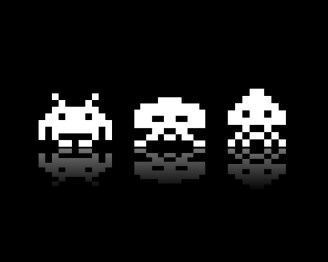
Space Invaders

space_invaders

We are at a point in education where we need the help of politicians more than ever. In less than a year we have been challenged through cuts in the SEND band funding, a budget formula that is causing many schools to nose dive into a deficit, a recruitment and retention crisis fuelled by ramped up expectations against a curriculum that nobody knows how to assess, and an education bill that favours illogical and ideological change over common sense and reason.

Any one of these changes across one academic year would have been challenging enough, but altogether? Do you remember the last few seconds just before you lost at space invaders? When the multitude of alien ships, after growing relentlessly in number, finally overpowered you, and slowly but surely lowered themselves onto your head, crushing you, and turning you into a mashed up heap of broken bones, fluids and brain-jam? That’s a bit similar to what leading a school has felt like in the last few months.

Unlike the ineffectual laser cannon of space invaders however, we schools are not just trying to overcome the challenges that face us; we are also trying to deliver a service. And our customers have great expectations. The age of Mumsnet has given rise to a level of ‘parent-voice’ that is unprecedented in the history of schooling. So much so that politicians have succumbed to drafting education policy that would suggest courting the ‘parent pound’ is their top priority. Parents have been told time and time again that they have the right to demand, not only the best, not just more, but whatever they feel entitled to.

In recent years, schools have bent over backwards to accommodate parents’ wishes and demands. If anything is not deemed to fit in with parents’ expectation, it is fair game to be debated online, petitioned in the playground and complained about to Ofsted. You can’t blame the parents. They have the priority of their child at the forefront of their minds. So, of course, do we. It’s just that we happen to have everyone else’s kid to think about too and that’s what causes the problem. The education profession has been systematically de-professionalised by politicians whose default move, when confronted with a ‘this isn’t good enough’ scenario, is to simply put it out on twitter that ‘schools will have to make it better’. Schools are now expected to not only educate children but to solve the ills of society because that’s what every parent wants.

Well, if schools are going to survive all the budget cuts and the raised expectations in standards of reading, writing and maths, the politicians are going to have to give us something back. They will need to make it clear that schools exist purely to educate children. If they intend to strip back our funding and ramp up stringent accountability measures they will need to better manage parents’ expectations, as we will no longer have the capacity to do everything.

Parents will have to understand that we can do it all no longer. It’s a sad truth but, as schools begin to run themselves using the minimum number of teachers required, society is going to have accept it. Your child can’t swim? Take them swimming on Saturday. Your child was bullied online last night? Close their account. You think your child isn’t being stretched by the mastery curriculum? Go and hire a personal tutor. Your child has behavioural and emotional issues? Take them to a psychiatrist.

There will need to be a national understanding that schools that say ‘no’ are not cruel and uncaring institutions shirking their responsibilities as they hot-house children for exams. Schools that say ‘no’ will simply be prioritising in order to fulfil a statutory duty to raise standards in education. They’re not being difficult. It is not unacceptable. You can’t complain. They are just trying to do a job with limited resources. It isn’t a perfect model and it’s not one any educationalist would choose (well maybe a neo-post-punk-prog-rock-traditionalist would) but it’s the one that we’ve got and we need to make the best of it.

This is not a conversation I want to have with parents. It is not the way I’d choose to run a school. But the uncomfortable truth is, as good as we are, we can’t perform miracles.

If the government is serious about its white paper and its current valuation on the cost of running a school that meets the needs of individual children, then it better start flexing those opposable thumbs…because there’s going to be an army of parental space invaders rushing down to crush them and, trust me, they’re really good at winning.

If any parents at my school (and I know some of you will) read this particular post, please remember that I love you all, and will always try, as hard as I can, to meet the needs of your children whatever it takes. It’s just, well, it’s going to get harder and harder, so bear with me.