The Fugitive

There is a line in the film ‘The Fugitive’ where, in response to Harrison Ford’s earnest protestations that he didn’t murder his wife, Tommy Lee Jones says: I don’t care. Never have three words of dialogue summed up a character so perfectly. Within those three words contain the very DNA of Tommy Lee Jones’ Samuel Gerard, a bloodhound of a US Marshall, who cares more about the scent than the sentiment. When he delivers that line, with a facial expression that would make a plank of wood seem lively, you immediately understand that we are in the company of a true professional. A man who is able to do his job to exacting standards because he focusses on the right thing with absolute clarity. 


As you walk into the staffroom of Ofsted HQ there is, I imagine, a large banner stretching right across the far wall, just above the washing up rota and the comedy postcards saying ‘Keep calm and carry on inspecting’, ‘You don’t have to be a failed teacher to work here but it helps’ and ‘Those who can, do; those who can’t, teach; those who can’t teach, teach PE; those who can’t teach PE become Ofsted inspectors’. The banner, written in comic sans, was put up just after their Christmas party, by Sean Harford himself, and contains the 2016 mantra for Her Majesty’s Inspectorate: Myth-busting makes us feel good


This mantra has already brought us a document on what inspectors don’t want to see during an inspection. I imagine that every self-respecting Head has already had every word of this tattooed all over their body, in a variety of gothic fonts, so that, during a rogue inspection, they can tear open their shirt and scream ‘Read the small print you rogue son-of-a-bitch, you can’t expect to see any sort of marking in our spelling books.’ The mantra banner or ‘bantra’ (as I believe Sean likes to call it) has also resulted in a series of videos where Ofsted inspectors give us the lowdown on how to survive an Ofsted inspection like a pro (in short, Heads should concentrate on doing whatever it is that is important for their children and sod everything else). These will be followed by a series of myth-busting blogs, tweets and memes, culminating in a fancy dress vine video of all the Ofsted gang dancing along to an edited version of ‘Who you gonna call?’


It’s difficult not to admire, or even fall hopelessly in love with, this top-down rhetoric. Even if it feels a bit like Stockholm syndrome. I, for one, am happy to be seduced by my former abuser – I only hope that I can remember the safe word the next time we meet and I’m subjected to a data-enema. The thought of staring down an inspector whilst saying ‘But my children don’t need learning objectives that are also linked to British Values’ and getting away with it makes me giddy with excitement. 


Gone is the old Ofsted tagline of ‘raising standards, improving lives’. That was, after all, directed towards children and, in doing so, it muddied rather than purified the water inside the education chalice from which we all sup. With every inspection that passed, a raft of analysts were looking at features of all the reports and compiling lists of things schools must and must not do if they wanted to be judged positively. Planning. Marking. Teaching styles. Learning objectives. Targets. Text books. Consolidation. Challenge. Differentiation. The delicate tools of our trade were being blunted by short-sighted leaders and their obsession with doing what they thought someone else would like to see, as opposed to what worked in their school. In trying to raise standards through superficial measures it was the lives of teachers that suffered. Over-worked, under-valued and not listened to. Well, no more. We are entering a brave new world of Ofsted that promises to make sense of a once mad world and restore order and (work-life) balance. Ofsted: Busting myths, improving lives. 


Now, we can all be like Tommy Lee Jones. The next time we are told that in order to teach like champions we should be using a shared vocabulary that makes us all sound like the illicit love child of Siri and Cortana rather than a human being we can simply say: ‘I don’t care.’ The next time some piece of education policy around new times tables tests for three year olds gets announced through your twitter timeline, you can roll your eyes, swipe to refresh and say: ‘I don’t care’. The next time you’re sat on a table with an ‘outstanding’ Head who is telling you how their new approach to marking includes teachers skyping every child at weekends in order to counteract the weekend progress slump that was impacting on their Monday morning maths mastery assessment tests, you can take a bite out of their croissant, drain their coffee cup, look them dead in the eye and say: ‘I don’t care’. 


How liberating. All we have to care about is doing what’s right for our children and our teachers. I love it when a plan comes together.


The one tiny fly in Ofsted’s myth-busting ointment is, and well, it’s such a small matter I almost feel silly mentioning it, but the one teeny-tiny flaw in the plan is that we no longer know what is expected of us. Thanks to the edu-brains of the DfE and Whitehall there isn’t anyone who actually knows if, whatever it is we have deemed appropriate to teach and assess our pupils this year, is on the money. Add to this absence of clarity surrounding progress measures the smorgasbord of options in terms of curriculum material and assessment tracking systems and you’re left feeling like a four-year-old trying to choose which option of free school meal to have on their first day at school. I mean, you know it’s not a good sign when Sean Harford is having to write to all Ofsted inspectors telling them to be ‘flexible and understanding when they consider the outcomes next year’ for schools. This might as well have an additional subtitle saying ‘look, it’s not schools’ fault we’re in this mess so go easy on them’ but I’m sure politicians don’t read subtitles – it’s probably against their British values. 


I, for one, have never been prouder of the education that the children in my school are receiving but I have no clue as to whether this is going to be reflected at the end of the year. I’m also reasonably secure that I’m not working my teachers into an early grave. But I’m yet to work out if that is enough. Now, logic tells me that if we teach what the children don’t know, everything will work out, but, until this has all played out in real time, that still feels like a bit of a gamble. I may be trying to act like Tommy Lee Jones and stick to the Ofsted bantra, but I have a bad feeling that I’ll be the Head teacher equivalent of a fugitive on the run, trying to protest my innocence as an inspector, struggling to track down my progress data, stonewalls me with three words: I don’t care.

Who’s the daddy?

Shirley-Crabtree

One of the more irritating questions that occasionally gets fired my way is ‘Do you have children of your own?’ It irritates me because it is usually asked as a rhetorical question; and what’s more annoying than a rhetorical question? It is normally asked by a parent who is, at the time, aggrieved by something that I have done. To be more specific, they are aggrieved because I have made a decision that they disagree with. To be even more specific, they are aggrieved because I have made a decision that impacts on their child, in what they perceive to be a negative way, and they really don’t agree with it. And, at this point, the only logical conclusion they can come up with for me making this decision is that I am childless tyrant.

I have a rather primal reaction to being asked the question in the first place as I simply loathe the loaded and judgemental nature of it. I find the very idea that I may somehow not be a complete human being because I have not fathered a child rather insulting – the concept that, as a non-parent, I am bereft of empathy, compassion or understanding. I mean, I’ve never had my genitalia cut off with a knife; does that automatically mean I am a fan of female genital mutilation? Of course not; the very notion is absurd. And yet my professionalism can be called into question because no one calls me ‘Daddy’.

It is, in my opinion, a cheap shot. Not to mention impertinent. What business is it of anyone else’s anyhow? I have brandished my ‘right to privacy’ card several times on this matter. I remember one parent in particular, who seemed desperate to know in order to prove their point, just wouldn’t let it go. I was taken aback by the ferocity with which they demanded to know the precise number of immediate family members I had waiting for me back home. In the end I had to point out to her that maybe I wouldn’t be comfortable telling a relative stranger some of the possible answers: I have children, I don’t have children, I can’t have children, I had children…

What also irritates me is that it is a difficult question to answer in the negative without sounding exactly like the person they suspect you to be. It’s like telling someone, on the cusp of an argument, that you’re not getting annoyed – nigh on impossible to sound anything else but slightly, if not very, annoyed. As soon as you balk at answering or come right out and say no, a look comes over them as if to say ‘well that explains it’. At once, you justify their prejudice and there’s no going back – I mean, I’m a pretty petty guy but even I won’t start a family just to win an argument. No, as soon as you’ve given the game away they exit up on their high horse across the moral high ground, never to return. And that irritates me.

It is irritating because I’ve never lost an interview for a job because I didn’t have kids. That’s never been part of the recruitment process. I’ve never finished day one of the process, only to receive an evening phone call from the chair of governors not inviting me back for the second day, due to my lack of child rearing experience. ‘The other candidate not only had more experience of senior leadership, but they’ve spawned more children, sorry.’ I’ve never had to enter appraisal negotiations where the governors agreed to a pay-rise and a better car-parking space as long as I deliver improved Key Stage 2 results and a baby in less than a year. It’s never happened, so why is it an issue?

As I said at the beginning, this question is usually asked by a parent when they are feeling less than deferential towards me. It is usually following an assumption that I have made a bad decision because I’m not only childless, but also an ogre. Now I understand that a parent takes things personally, especially if their child is on the receiving end of ‘whatever it is they’re unhappy about’, but the knee-jerk reaction to then demonise the educators is frustrating to say the least. Is it so out of the realms of possibility that an unpopular decision has actually been a difficult decision to make? Is it impossible to fathom that I have had to take into account the needs and situation of other pupils in order to decide which would be the most appropriate course of action to take? Or, because you don’t like my decision, is it actually easier to conclude that I am a childless, incompetent and cruel Victorian disciplinarian?

I suppose it is human nature that during difficult or emotive times some people find it hard to look at the bigger picture. This is one of the more challenging aspects of headship: having to make and communicate decisions that are difficult but necessary, appear transparent despite the numerous sensitivities that may be at play and act fairly even when this results in differing consequences for those involved. To do so with true compassion for all parties can cause you to appear dispassionate to those that oppose you. This is where you must be guided by your sense of humanity and professionalism rather than any paternal instincts you have, and it is here where I doff my cap to those leaders who are parents…according to those angry mums and dads demanding to look at the family snapshots that they suspect are not hidden in my wallet, your job must be even harder than mine.

Artificial Intelligence

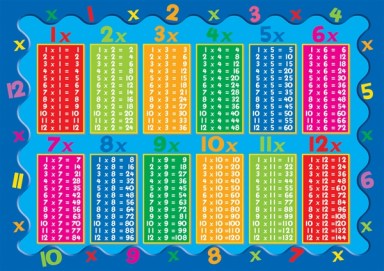
times-tables.jpg

I can only assume that the reason why the DfE and their sponsored Boudicca, Ms Morgan, insist on issuing policy via social media, rather than through professional channels, is due to the fact that there are now so many different types of educational institutions out there that it’s a nightmare to keep a comprehensive rolodex of Head’s email addresses. Far easier to tweet it and hope that most of us will catch it as we try to navigate through our timelines, that are mostly dominated by the edu-war between the progressives and traditionalists. Either that or Ms Morgan suffers from an acute sense of self-awareness and knows that if many of her proposals were quietly put forward, the profession would snuff them out like a candle at the end of its wick. Far more effective to release them into the wider public domain under the guise of transparency: to show parents that schools are simultaneously not educating well enough while piling on expectations for schools to solve the world of, well anything and everything.

And so we come to today’s piece of education policy: Times tables to be tested by age 11. And why not? This seems utterly sensible. As Nicky Morgan says, these tests ‘will help teachers recognise those pupils at risk of falling behind’. This is superb logic. I’ve lost count of the times I’ve asked my teachers if their pupils know their tables only to be answered with a grunt, a scratch on the head followed by the comment: ‘Dunno, we ain’t tested them or nothing.’ Well this test will put an end to that. Another piece of cunning is that these tests are taken at the end of KS2 within a curriculum that demands that by Year 4 all children should know their tables. So, waiting another two years to test them will surely mean that everyone will pass. Although, how will I know if the Year 4 teachers have recognised those pupils who are falling behind if there’s no test? Hmmm. I’ll have to think about that one.

Another reason why this test is good is because it fully supports the mastery curriculum. With its emphasis on understanding mathematical concepts and application at a greater depth than ever before, an online test on your tables, with its closed questioning and pressure cooker timing, is the perfect way to model this. It is also the perfect companion piece for the end of KS2 written arithmetic paper which, due to its lack of calculator usage, is at risk of allowing non times-table knowing pupils to exceed beyond their capabilities. And don’t get me started on the second and third papers where pupils will have to apply mathematics to problems and to reason: it has been statistically proven, by me, that a pupil can get a level 6 on all three of these papers whilst at the same time have absolutely no mental recall of 8×8. Thank the heavens for this online times table test. It’s all better now.

One of the most important reasons for introducing education policy is public opinion. Like Early Years teachers, parents have little understanding of maths, especially the new maths curriculum. This means that they may instinctively not like it. Add to the mix the fact that it is harder and therefore pupil test scores may be lower, parents (and Early Years teachers) may think that schools are becoming more and more rubbisher. However, parents (even Early Years teachers) remember doing their tables when they were children – they can’t actually remember their times tables, they just remember having to do them – and therefore these times tables tests will provide some comfort and reassurances that primary schools are not just doss houses for the thick. Learning your times tables in preparation for a test triggers familiarity and parents will therefore think that schools are doing a gooder job. Never mind that their child didn’t reach the expected standard for maths overall in preparation for secondary school; they can regurgitate their 7 times tables to any number of raps, songs, rhymes and limericks complete with hand actions, and, for the sake of inclusion, in Makaton.

Finally, and this is where you have to take your hat off to Nicky Morgan and her hoard of caged DfE maths monkeys, this news will, if nothing else, spur on the fight between the traditionalists and progressives. Goodness knows how many Twitter feeds and blogs are going to be written and debated between these two armies arguing the pros and cons of children knowing facts about some numbers. Some will say that rote learning is best, some will say that knowing 8×8=64 because it sounds a bit like ‘I ate and I ate until I was sick on the floor’ is best, others will say that it’s all good, some will say it’s all bad and that this one piece of policy is the straw that broke the education camel’s back… My guess is that this news is just a ruse. Ms Morgan knows that we won’t be able to help ourselves and, while our timelines get buried with argumentative times tables edu-babble, she will quietly tweet out some other bit of policy that is far, far worse.

Well I’m onto you Morgan.

The times-tables have turned. I’ll be watching your twitter bombs like never before. Of that you can be sure. Just as 7 x 12 is 84…I think.