Nurture 16/17

2017Leadership 2016

I am a very driven person. I want to be successful and by that, I mean, I want to be good at my job. I admire people who are good at what they do. I am motivated through substance. I have little time for people who seem to do nothing more than repeatedly vocalise their virtues. I want my success to have substance. More importantly I want to be a substantive success. I know that obsessing about a singular drive won’t get me that. High results can be a hollow victory. Happy staff can hide a lazy leader. An obsession with Ofsted can tear a school apart. To be a truly successful Head is a near-impossible goal. But, in 2016, I had a taste. Granted, it was during an Ofsted inspection, but when the lead inspector told me that he had never received such a positive response from the staff survey concerning the school’s leadership, I felt pretty good. Reading in the report that the ‘innovative and inspirational leadership of the headteacher has established a professional learning community…staff overwhelmingly support school leaders’ I must admit, I allowed myself to think ‘that’ll do pig, that’ll do’.

Leadership 2017

Where next for the most inspirational Head of the century? Well, it won’t surprise you to learn that about two days after that report was written I had forgotten all about it because, you guessed it: I have a school to run (Yay!) and that’s a full-time job (Yay!) and it’s really hard (Yay!) and it takes over your life (Yay!) and I’m really tired (Yay!) when will it end (when you’re able to retire at 92-Yay!)  No, my hopes for a book deal and @theprimaryhead stadium tour quickly dissolved into a distant dream. Ah well. Still, it’s not all school, school, school. I’ve said that I’d say something at #PrimaryRocksLive in 2017 so that should be, interesting? And I’ll be helping put on the biggest education conference the South West has ever seen! Save the date you edu-keeners because on July 1st #InspireSouthWest launches and it’s going to be EPIC! So, there’s that and rescuing the school from budget annihilation. (Yay!)

Governors 2016

Despite being a marvellous leader (I’ll stop soon, honest) governance has never been my strong suit. I have, in the past, tended to find it a time draining distraction. The boundaries can so easily be blurred so that too much time is spent sweating the operational stuff which, in my opinion, is my business. I blame everyone! But if I genuinely think this ship is ‘mine’ then the bulk of the fault must lie with me. Near the end of the year I reflected on my performance in relation to governance. I found myself to be too quick to frustration and this, I know, led to governors perceiving me to be difficult. That ain’t classy. I can blame stress. I can blame personality. But the next step of blaming is doing something about it otherwise you’re just a schmuck. So, it’s time to have a change in mind-set.

Governors 2017

I feel born again! OK, that’s going a little too far but I do think I’m ready to believe in the power of governance! Seriously. I feel that there is now some clearer understanding between me and the governors regarding what we’re going to be getting up to this year. My performance management, earlier on this year, helped with some of the granularity on this. There was recognition, on both sides, that maintained schools have some pretty huge challenges coming their way so we should probably focus on them rather than the school at an operational level. In short, they trust me to run the school. Likewise, I need their help with the bigger stuff! As for me personally? I need to relax and not take every discussion at governors so personally. I may be the Head but, during those meetings, I am but one governor in a room full of governors.

Behaviour 2016

So, as you know, we had Ofsted this year. I know I’ve already mentioned it, but, did I tell you that we got an outstanding judgement for ‘personal development, behaviour and welfare’? Our children are polite and respectful and they know that teachers care for them. All staff are relentless in their efforts to meet the needs of all pupils Everyone thinks that behaviour in, and around, school is excellent and pupils are very respectful about all aspects of their learning. You can imagine how proud we felt as we read these words. Creating a school capable of garnering such plaudits is not easy. It takes time, effort and a clarity of ethos that everyone needs to adhere to. Nothing that we put in place was designed so that it would reflect well in an Ofsted report. We did it because we wanted to create a lovely school. I choose the word lovely on purpose. Yes, I wanted an inspiring, super-effective, dynamic school with high standards. But I also wanted it to be lovely. I’m very pleased that we got it all.

So, behaviour was sorted.

Then September arrived.

Behaviour 2017

I’m cheating a little here because most of what I’m about to say happened post September. But anyway…about three weeks into the new academic year and the school was in crisis. For a variety of reasons, there was now a small group of children who were presenting extreme and challenging behaviours in school. To challenge us further, due to the city’s financial cuts, we also found that we were completely on our own in trying to support children who were, if I’m honest, dangerously close to being permanently excluded.

After a few more weeks of trying to manage children, who had incredibly complex needs but who were also demonstrating angry and violent behaviour, I decided to do something radical.

Admit that we were totally out of our depth.

This was the turning point. Admitting this, and being totally honest about these challenges freed us up to think differently. Having no money or outside help forced us to think creatively. We talked openly to the staff about the situation and about our plans. We re-designed a couple of rooms in the school. We wrote a scheme of work that the Deputy and I delivered every morning to a key group of pupils – complete with songs, puppets and dancing. We spent time building relationships with the children, the families and with the staff who were working so hard, every day, with these children. What’s more, it started to work.

It’s early days and we have much further to go in 2017. When I come to reflect on my successes, this time next year, how I managed this behaviour crisis is going to weigh heavily in my judgement. I’m confident I’ll be able to say that I better understand these children. I will support my staff so they do too. I’m also determined that we will do all this whilst  maintaining our high standards. Finally, I promise you this: my school will still be lovely.

Edu-Twitter 2016

I have thoroughly enjoyed myself on Twitter this year. I’ve read some marvellous blogs and I follow some great people. The little DM groups that emerged during SATs week were a particular highlight. As were all of @jpembroke’s support with the new RaiseOnline data. The sense of goodwill and camaraderie that you get on Twitter is often unparalleled. I would like to thank everyone I’ve engaged with and I look forward to seeing you all again next year.

Edu-Twitter 2017

2016 also had its fair share of negative Twitter. The arguments. The hyperbole. As far as I’m concerned…I love it. Yes, at times it is infuriating and I empathise with those who have felt bullied. I haven’t experienced that but it can’t be nice. But will 2017 be any different? No, of course it won’t. I may be different though. I may join in a bit more. I’m getting to the point where I think I’ve reached a limit in how much I can ignore nonsense that I fundamentally disagree with. The only thing that puts me off is the time it would take to disagree. Twitter hasn’t really grasped how to do arguments properly. They go on and on and on and on! I think, for 2017, I will invent a special code, or symbol, that indicates the number of tweets you can be bothered to use up on any particular topic. That way, the next time you’re fifty tweets in, justifying the tone of a word you once used in a tweet back in 2014, you simply unleash ‘the grape’ (or whatever I decide the symbol is) and everyone knows that you’re stopping this madness in 5, 4, 3, 2, 1 tweet’s time.

This time it’s personal 2016

Still standing, 2016, still standing!

This time it’s personal 2017

I’ve become a runner! Can you believe it? And like an over enthusiastic puppy I’ve even signed up for the Bristol half marathon in September. Get ready 2017, here I run!
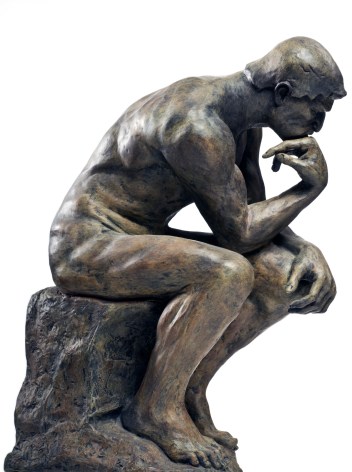
 

The Thinker

Thinking-Man-Stock_000005908297Medium11.jpg

As I lay in bed wondering if I would ever walk again – having been cruelly crippled by chronic back pain and reduced to a whimpering husk of a man, desperately trying to cease all bodily movement until the time inevitably came to shuffle over to the side of the bed and wee into a bucket – it seemed an appropriate time to consider the changes I would have to make in my potential new life as a, now bedridden, beacon of education.

The harsh reality seemed clear to me: I was never going to be able to stand up, let alone walk, again. How would I continue? Would I have to face-time my assemblies and staff meetings? Would I have to employ my own special Hodor to carry me upon his back as I went about the school observing lessons? Did I now have a legitimate excuse to miss governor meetings? More importantly, could I, considering the school’s financial position, buy a new wee-bucket on the school’s credit card?

The saving grace was that I could still access Twitter. By propping myself up on a mountain of pillows, and using my copy of ‘Battle Hymn of the Tiger Teachers’ as an arm rest, I could just about hold up my phone and swipe through my timeline. All was not lost.

And so, in agony, I purveyed the Twitter landscape. I stumbled across a blog entitled ‘Nobody’s actually against knowledge are they?’ by a little known blogger called @oldandrewuk. In it, the writer discusses the debate in education around traditionalism vs progressivism. Specifically, he considers how some progressive folk are denying that there is even a debate going on anymore. Some Progressives are coming out and saying that they too are in favour of teaching knowledge and they’re now wondering what these Traditionalists are getting so hot and bothered about.

This, to many Traditionalists, is bloody annoying. You see, the argument between Traditionalists and Progressives used to be so simple: traditional teaching = teach knowledge; progressive teaching = teach skills. Now it’s all being muddied with Progressives backtracking on all this ‘skills’ stuff and claiming that they don’t have a problem with knowledge. But, according to the writer, they can’t really be in favour of knowledge if they are against testing it, or, teaching an awful lot of it. If you’re against testing the amount of knowledge a kid has in their brainbox, or, want them to solve imaginative problems that will make them use and strengthen their understanding of the knowledge, then, you’re nothing more than a Progressive in a Traditionalist’s tunic.

I suddenly began to feel queasy. It wasn’t the fact that I’d taken ibuprofen on an empty stomach or that I’d lost sight of the wee bucket. It also wasn’t because I disagreed with the blog. It was because I was questioning my own mind. I thought I’d always maintained a nuanced balance regarding what I considered to be important in education. A subtle blend of the traditional and the progressive. But was I kidding myself? Had I, in fact, changed my stance and become more traditional? And if so, why was that? Had I seen the light? Or had I simply conformed, been beaten down by the curriculum, the tests, the tedious battles on Twitter between the two armies that tend to, in my opinion, be won by the Traditionalists only because they have the energy to keep on going when everyone else has gone to bed?

When confronted with change in physical form, as I was now (would I ever walk again?), I could consciously adjust my thinking (forget my holiday to climb Everest, I need to save up for a Stanner Stair Lift). But when ideological and educational reforms surround me, am I unable to consciously adapt? Or do they warp my thinking until I have convinced myself that not only was I right before, but I am also right now?

There was only one way to find out. I had delve into the deepest darkest depths of my mind. I closed my eyes and began to recite an old Tibetan chant that would bring about a zen like state and allow me to transcend my own consciousness. Then I realised that not only was I not The Ancient One but it would also probably be easier just to re-read some of my oldest blogs.

It took some time (my word I’ve written a lot of drivel) but eventually I found something I’d written in 2013. In a blog entitled ‘Goodbye Mr Chips, Hello Mr Squeers’ I gave my opinion on this ‘new’ curriculum of ours. I didn’t appear to be a massive fan:

This, as I see it is the biggest disappointment of the national curriculum: it’s just a list [of facts] that he [Gove] wants children to know… This expectation for mass content knowledge coupled with a lack of thought on curriculum skills may, I fear, mean that topics as I know and love them will disappear.

So, I thought to myself, I was a massive Progressive after all! I was exactly the sort of person Traditionalists in 2013 loathed. I even dared to raise the idea that you could get children to learn about historical events, personalities, bias, politics, and culture through art rather than by memorising facts. I can only imagine how I survived the inevitable onslaught of derision that this post must have garnered on Twitter as I appear to have blocked it from my memory completely.

Near the end of the blog however I start talking about pub carparks. I couldn’t quite grasp why until I remembered that this was written at about the time that Richard III was found buried underneath one. My main objection to the new curriculum, at the time, was that although knowledge is great, too much emphasis on ‘facts’ result in a weak level of understanding. Simple recall, without any application, evaluation or opinion, does not a learned person make. If all we do is teach single-subject facts, we will produce nothing more than a nation of expert pub-quizzers; learners able to demonstrate a veneer of knowledge at the drop of a hat but without the deeper understanding of why what they know is important.

I still believe this. But I am glad to say that my prediction was wrong. We are not producing ‘knowledgeable but ultimately useless eggheads’. And this is not because either the Progressives or Traditionalists have won the great educational debate. It is also not because I have changed my stance or because I believe in knowledge without testing. Testing is fine. Just don’t tell me that a perfect SPAG score means you’re an effective writer, or that because you can name all the Tudor monarchs you’re a historian, because that’s just silly. Instead, I think the biggest impact on children developing a deeper understanding of the knowledge they are learning is because of life beyond levels. As I said in May 2016, in a post called ‘Metamorphosis’.

We are no longer teaching a ‘progress’ curriculum; we are teaching a ‘knowledge’ curriculum. I like the move away from vertical progress. I think the opportunity to play around with the highest level of knowledge you currently have – challenging it, stretching it, strengthening your understanding of it – is rather liberating.

You can’t gain masses of knowledge without some traditional teaching methods. However, you can’t strengthen your understanding of said knowledge if you are not free to explore and try it out before you are tested on it. Schools are now free to do this in a variety of cross-curricular, imaginative and progressive ways because we have been freed from the shackles of vertical assessments. The 2016 SATs may have been a shambles, and the standards may have been ridiculously heightened but, so what? Continue to teach a well thought out and challenging curriculum effectively and most pupils have a chance of getting there by the end of key stage 2.

It was therefore with a sigh of relief that I closed my eyes and smiled at the realisation that I had not changed. I had evolved my thinking but, deep down, I was still as subtle an educator as I ever was. I realise that may make me twice as irritating to twice as many people, but hey, it’s only Twitter.

With that, I heaved my legs over the side of the bed, grabbed a walking stick and pushed myself up to a standing position. Bellowing a great howl as I straightened my back, and putting one foot in front of the other, I elegantly hobbled to the toilet. Because some things are not meant for the wee bucket.

No more sleepless nights

insomnia_sleep

Being a Head can be the loneliest job in the world.

Yeah, yeah! 

Boo-hoo!

You get paid the big bucks. You volunteered for the job. There’s no point moaning, from the luxury of your leather chair, about the fact that the job’s tricky.  

Quite. Couldn’t agree more.

I don’t mind the loneliness. When you look beyond the cliché and explore why headship sometimes feels lonely, I think I prefer it that way. I wouldn’t want anyone else having the full accountability for some of the stuff that lands at my feet.

I would, for example, never seek to burden teachers with the emotional trauma that often comes from taking part in a child protection case conference. Yes, I’ll share the outcomes, the plans and any pertinent details. But I’ll keep the tears, the abuse, the anger, the embarrassment, the denial and the pain, that often takes up so much time at these meetings, to myself. Walking out of those meetings, after you’ve been hit with another person’s depressing reality, is isolating. Your moral imperative drives your refusal to give up on these children in crisis, but the reality of relentless financial-cost-saving-initiatives forces you to acknowledge how alone you are in trying to protect the vulnerable. At times, it appears hopeless. But how could I share that? So instead, I absorb it. Not because I’m a martyr, but because I need teachers to focus on supporting these families in the present for the sake of their future. Too much information can make you jaded. That’s the last thing that is needed. So, I happily keep it to myself, and so what if I lose a little sleep in the process?

Talking of financial cost saving initiatives…have you checked your school’s budget against the new national funding formula? If you thought 2016 was a depressing year, wait until you count the number of cuts schools will have had to make to their infrastructures in twelve months’ time. I can’t imagine that any school will be safe from some form of ‘managing change’ in their attempt to balance their budget. Having to take a lead in this process is, perhaps, the loneliest element of a Head’s accountability. And quite right too. It’s not pleasant. It is deeply personal for those involved. But it must not be personal for the Head. That is not to say that it does not require sensitivity, transparency and tact; it most definitely does. But don’t confuse being compassionate and showing a little humanity with getting personally involved. Decisions must be made. The Head must make them. It won’t be nice and won’t be comfortable. But it won’t be as uncomfortable or unpleasant for the Head as it will be for those on the other side. So, be tactful and keep your emotions to yourself. So what if all you lose in the process is a little sleep?

Finally, in my little lonely trinity, there is Ofsted. You still can’t escape the fact that, in terms of accountability, Ofsted is about as big as it gets for the Head. When a school enters its ‘inspection window’ there’s not a lot else that goes through the brain. Everything suddenly starts getting viewed through the Head’s O-Vision spectacles. Something good happens: put it on the SEF immediately. Something bad happens: how are we going to explain that to the inspector? It can become an obsession. It can become a distraction. It can, if you’re not careful, prevent you from doing your job. There are still too many anecdotes of Heads who appear to be running their school for Ofsted as opposed to for the community. Shell-shocked staff, anxious about coming to school, shuffle into work in fear of the next Ofsted-orientated initiative that needs to be in place yesterday. The Head, after delivering yet another speech in the staffroom about the new marking criteria, wonders why nobody else seems to care. They can’t see that they have eroded the staff’s professionalism through their obsession with Ofsted. Yes, it matters. Yes, it’s the Head’s name on the report. But even an outstanding Ofsted report can’t fill the hole left by an absence of staff respect and support. Best to keep your Ofsted obsession to yourself. So what if it’s only you losing sleep over it?

It is a lonely job being a Head. But, in the right circumstances, that’s highly appropriate. If you focus on building a positive and professional culture within your school then, although you may still feel lonely at times, you will always know that you are not alone. Carrying out a lonely job is a small price to pay for working in a school where people respect and trust that you carry out your role with integrity. So, the next time you’re having a sleepless night, ask yourself whether anyone else in your school is wide awake thinking about your problem. If you think they might be, probably best to buy them a coffee on the way to work and try leading them a little differently. That way, at least one of you should be able to get a good night’s sleep tomorrow.